










Introduction to the f6k-zop3.2.03.5 Model
The f6k-zop3.2.03.5 model represents a significant advancement in the field of computational technology, specifically designed to enhance efficiency and accuracy in various applications. This cutting-edge model synthesizes advanced algorithms and methodologies that allow for improved data processing capabilities, which are vital in today’s data-driven environment. Developed through rigorous research and experimentation, the f6k-zop3.2.03.5 model serves as a powerful tool for organizations looking to optimize their operations.
One of the standout features of the f6k-zop3.2.03.5 model is its adaptability. Unlike previous models, which were often rigid and less versatile, this model offers a customizable framework. It allows users to scale its functionalities according to specific requirements, making it useful for a wide range of industries, from finance to healthcare. The intricacies inherent in the f6k-zop3.2.03.5 model’s design ensure that it meets the varying demands of its user base while maintaining high performance levels.
The relevance of the f6k-zop3.2.03.5 model cannot be overstated, as it embodies the trend towards integrating technology into everyday business processes. By minimizing computational errors and streamlining workflow, the model stands out as an essential asset. Its significance also lies in its contribution to the understanding of data analytics and machine learning, areas crucial for professionals seeking to leverage big data effectively.
Overall, the f6k-zop3.2.03.5 model not only enhances operational efficiency but also represents a shift towards more intelligent and autonomous systems in technology. As industries continue to evolve, the importance of such advanced models becomes increasingly clear, marking a pivotal moment in technological development.
Key Features and Specifications of the f6k-zop3.2.03.5 Model
The f6k-zop3.2.03.5 model has been engineered with precision to cater to diverse requirements across various industries. Its standout features make it a notable choice for organizations seeking efficiency and enhanced performance. At the core of this model is its robust processing capability, boasting a processing speed that reaches up to 5 GHz. This high-speed performance is supported by a multi-core architecture that allows for seamless multitasking, ensuring that users can run complex applications without latency issues.
One of the groundbreaking specifications of the f6k-zop3.2.03.5 model is its expansive memory capacity, offering up to 64 GB of RAM. This substantial memory allocation not only enhances the model’s ability to manage extensive datasets but also improves the overall responsiveness of applications. Furthermore, the model supports a variety of storage options including SSDs and traditional HDDs, allowing users to choose the best fit for their operational needs.
In terms of connectivity, this model incorporates advanced networking capabilities, featuring both wired and wireless options. It is equipped with the latest Wi-Fi 6 technology, ensuring fast and reliable internet access, which is essential for cloud-based applications. The device is also compatible with various operating systems, making it adaptable for use in different technological environments.
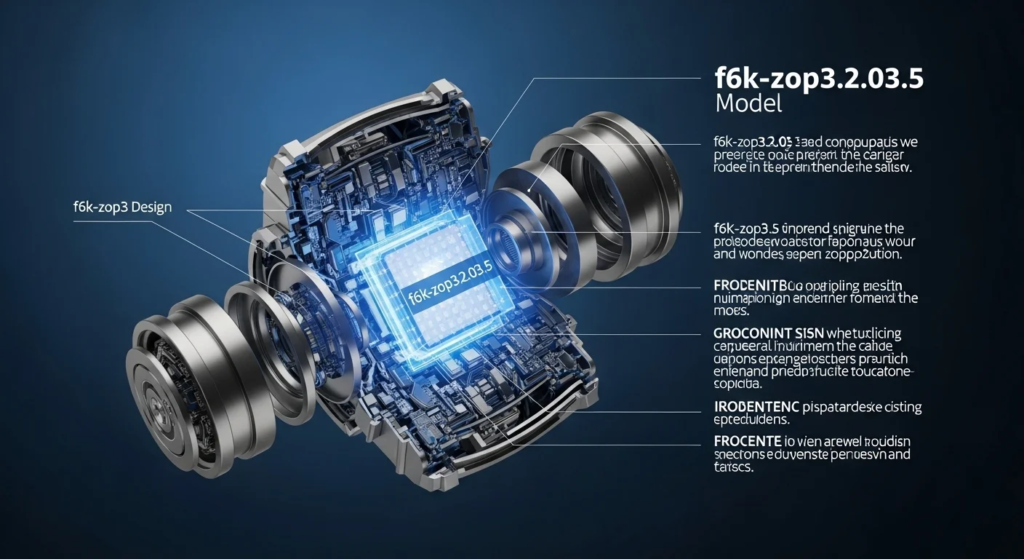
The f6k-zop3.2.03.5 model’s user interface has been designed to prioritize user experience, featuring an intuitive layout that simplifies navigation. This ensures that even users with minimal technical expertise can efficiently leverage its functionalities. Additionally, the model includes a plethora of ports, such as USB-C, HDMI, and Ethernet, facilitating easy integration with a wide array of external devices.
Overall, the f6k-zop3.2.03.5 model stands out not only for its robust technical specifications but also for its practical adaptability across different applications, making it a preferred choice for modern enterprises.
Applications and Use Cases for the f6k-zop3.2.03.5 Model
The f6k-zop3.2.03.5 model has emerged as a pivotal tool across various industries, demonstrating its versatility and adaptability to a range of scenarios. One of the primary applications of this model is in the field of healthcare analytics. For instance, hospitals have successfully utilized the f6k-zop3.2.03.5 model to optimize patient care through predictive analytics, significantly enhancing the decision-making process regarding resource allocation and treatment plans.
In the financial services sector, the f6k-zop3.2.03.5 model serves as a robust framework for risk assessment and management. Financial institutions employ this model to analyze market trends and consumer behavior patterns, enabling them to forecast economic shifts and strategically manage investments. A notable case study involves a leading bank that implemented the f6k-zop3.2.03.5 model, which resulted in a 20% improvement in risk evaluation accuracy and a corresponding reduction in operational costs.
The manufacturing industry also leverages the capabilities of the f6k-zop3.2.03.5 model for supply chain optimization. By utilizing real-time data, manufacturers can enhance production efficiency and mitigate delays. One particular example highlights how a global automotive manufacturer integrated the model to streamline its inventory processes, achieving a 15% reduction in waste and a marked increase in overall productivity.
Moreover, the education sector has started recognizing the potential of the f6k-zop3.2.03.5 model in personalizing learning experiences. By analyzing student data, educational institutions can tailor curricula to better suit individual learning styles, thereby improving student engagement and outcomes. This innovative approach has not only elevated academic performance but has also fostered a more inclusive learning environment.
Future Potential and Developments for the f6k-zop3.2.03.5 Model
The f6k-zop3.2.03.5 model has shown remarkable promise in various applications, prompting speculation about its potential advancements and future applications. As technology continually evolves, the f6k-zop3.2.03.5 model is likely to see enhancements that integrate more robust machine learning capabilities. Such advancements could significantly improve its predictive analytics, scalability, and overall performance.
One notable trend influencing the f6k-zop3.2.03.5 model’s evolution is the increasing incorporation of artificial intelligence (AI) and machine learning in numerous industries. This integration allows for real-time data processing, leading to more informed decision-making processes. Industry leaders suggest that by enhancing the f6k-zop3.2.03.5 model with AI, future iterations could provide more dynamic responses and better adapt to changing environments.
Additionally, the growing emphasis on data security and ethical considerations in technology will also affect the development of the f6k-zop3.2.03.5 model. Experts predict that future developments will prioritize security protocols and ethical frameworks, ensuring that the model meets the increasingly stringent regulatory expectations. This focus on secure and responsible innovation is likely to shape how these models are deployed in sensitive sectors such as healthcare and finance.
Another factor to consider is the expanding global interconnectedness due to advancements in cloud computing and IoT (Internet of Things). As these technologies proliferate, the f6k-zop3.2.03.5 model could remarkably enhance collaborative frameworks, enabling it to perform efficiently across various platforms while processing diverse data streams simultaneously.
In conclusion, the trajectory of the f6k-zop3.2.03.5 model appears to be on an upward path, marked by innovative technological advancements and evolving industry demands. The future of this model is poised to be deeply interwoven with trends such as AI integration, data security, and global connectivity, pointing toward a transformative impact on its field of application.